
The short answer: there's no single right way to cut curly hair. At Thriv we cut wet, dry, or both, depending on your texture, how your curls are sitting on the day, and the shape you want. What matters isn't whether your hair is wet or dry. It's whether the person holding the scissors understands how curly and afro hair behaves.

Search for hair cutting techniques for curly hair and the internet will tell you, fairly loudly, that curls must only ever be cut dry. We don't agree. Just as we don't believe every curly and afro client needs a curl cream, we don't believe one cutting method suits every head of hair.
Here's how Jade, our co-founder and cutting specialist, decides which technique to use, and how she teaches the rest of the team to do the same.
Cutting in the hair's natural state
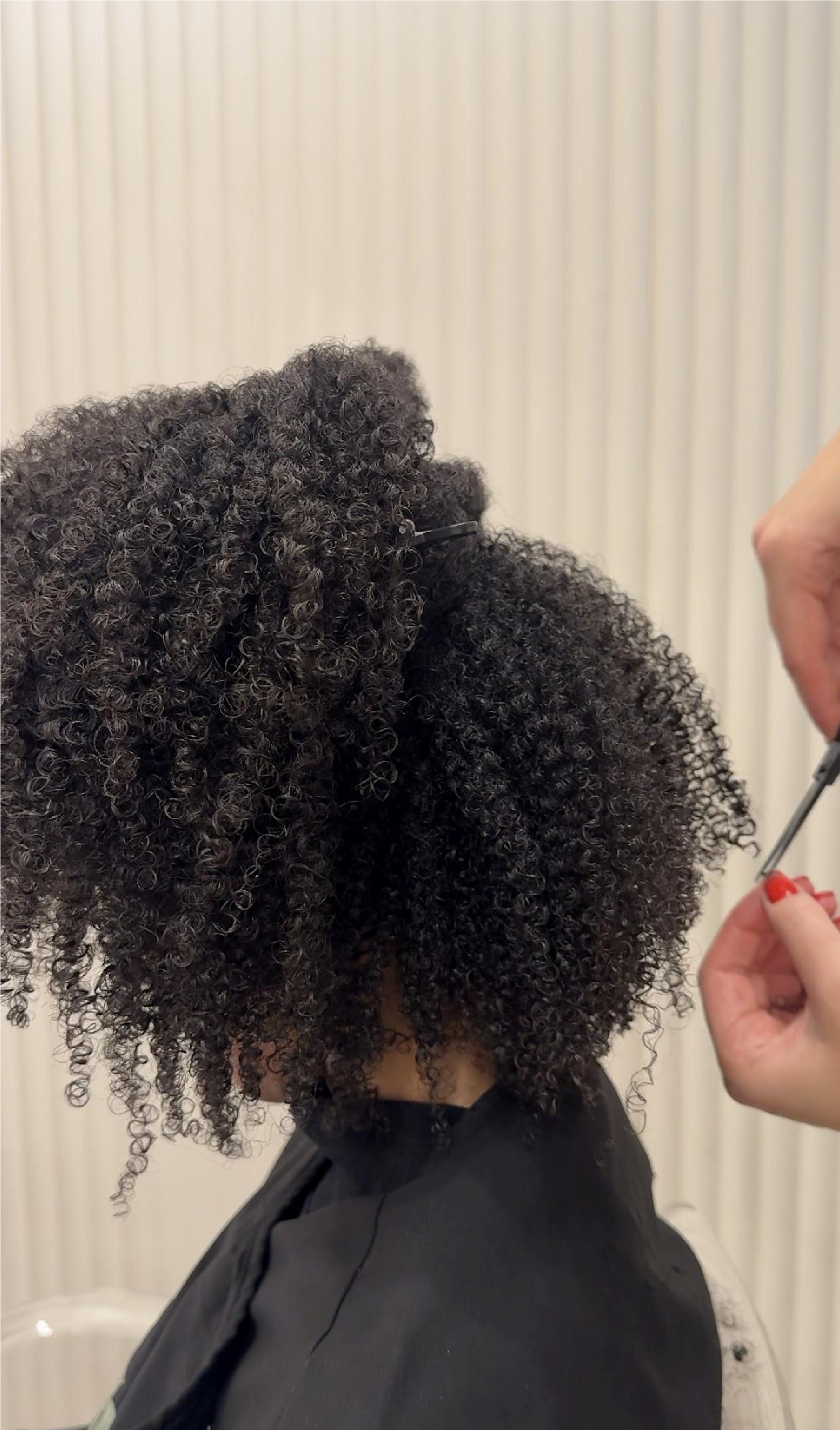
As a general rule, the tighter the texture and the more your volume stacks, the more likely we are to cut dry, in its natural state. That way we see the shape exactly as it will live.
The catch is that natural has to mean natural. If your hair is coated in heavy product, has been tied up in a bobble or clip, or is due a wash and the curl pattern has been stretched or flattened, what we see isn't a true picture of your curl. In those cases we'll wash and style first, then cut.
Cutting curls in their expanded form
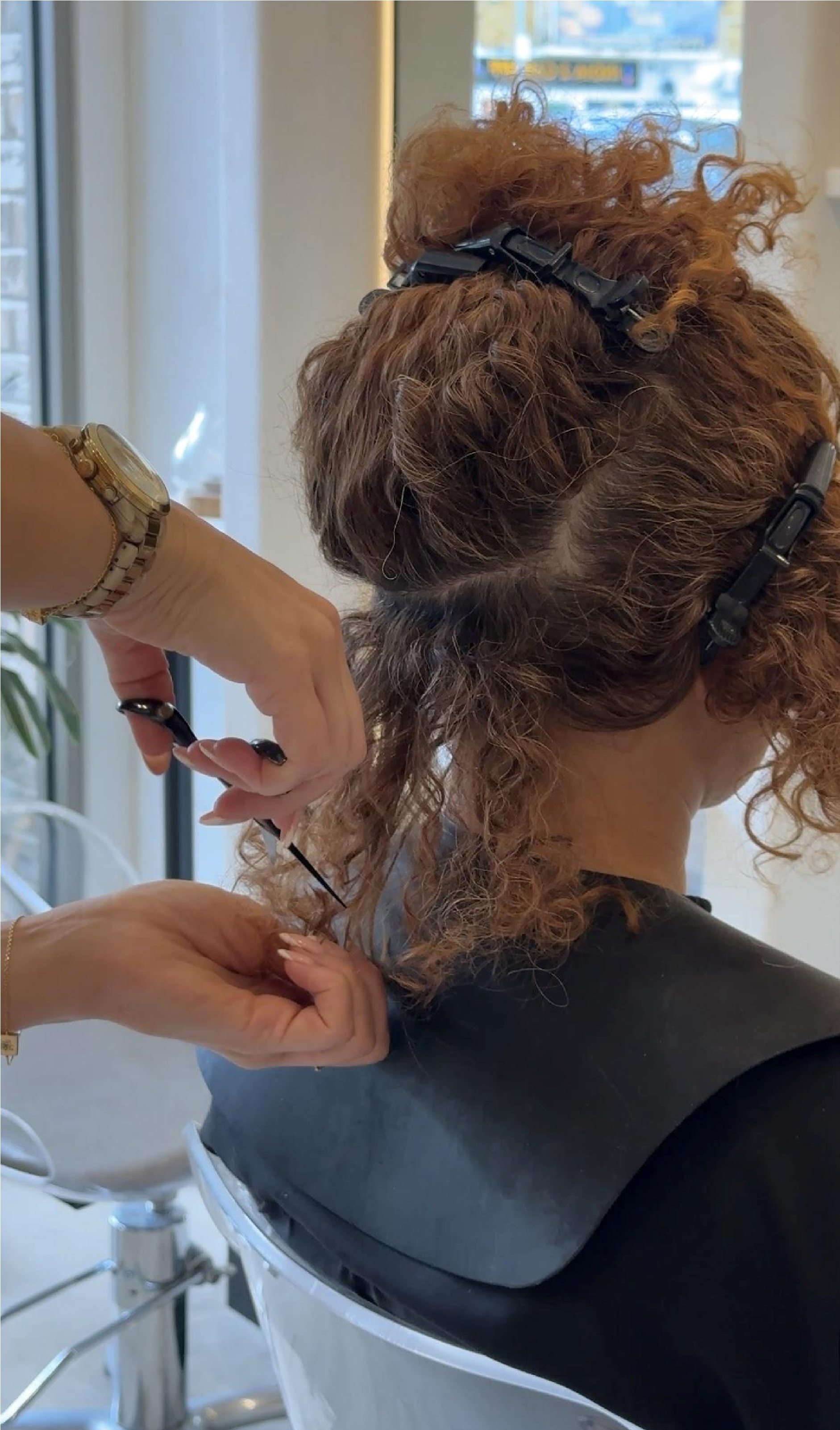
Sometimes we brush the hair out and cut it dry in its expanded form. This works well when hair is due a wash and the curls aren't sitting as they normally would, or when the curl pattern is fairly consistent throughout. Jade describes this as the most accurate way to get real precision on dry hair.
Wet cutting
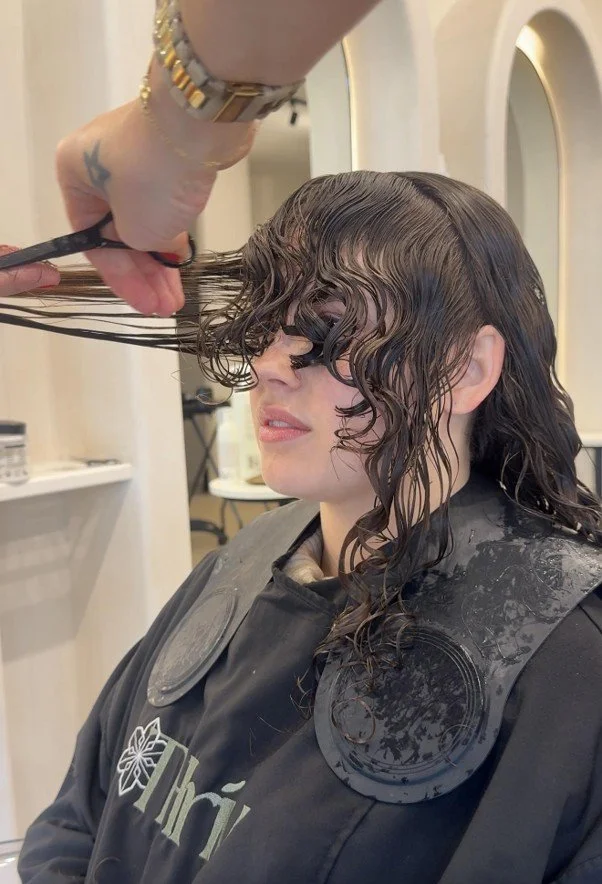
And if in doubt? We cut wet. Given everything you'll read online, that might surprise you, so here's why.
Why wet cutting works: the Sassoon foundation
Jade trained at Vidal Sassoon, across the Manchester and London academies, still regarded by many as the most prestigious hairdressing school in the world. Curly and afro hair wasn't an optional extra there. Learning every texture was non-negotiable from day one.
That training taught her more than how to cut. It taught her how hair behaves:
how shrinkage works across different curl types
how elevation changes the shape you create
how strands grow differently across the same head and techniques with this in mind
which sectioning and cutting techniques build the right shape for each texture
Twenty-three years on, most of the cuts Jade has done across her career have been wet. And there have been no complaints.

She's kept building on that foundation and her knowledge ever since, training under Reema Jaber (Cadō Curly Method), Jennie Roberts at the Jennie Roberts Hair Academy, Aeleise Ollarvia of Cut It Kinky and, most recently, earning her Rëzo Level 1 & 2 certification under Nubia Suarez. You can read more about that in why Thriv is Cardiff's destination salon for afro and textured hair.
So where does it go wrong?
When a curly cut goes wrong, the method is rarely to blame. Usually the stylist doesn't understand the hair well enough yet, or hasn't had enough hands-on experience with it. That's when wet cuts dry far shorter than planned, or dry cuts are left with holes or uneven shapes.
Understand the hair, and wet or dry both can work beautifully. Don't, and neither will save the cut.
How the Thriv team learns
Jade trains our team directly, passing on the same approach she was taught: read the hair first, then choose the technique. Every stylist at Thriv is trained in curl and coil work. Experience levels vary, and our pricing reflects that honestly, so you always know who you're booking.

Not sure what curly hair cutting technique is right for you?

That's exactly what a cutting consultation is for. We'll look at your hair, talk through the shape you want, and tell you honestly how we'd approach it: wet, dry, or a mix of both. If you go on to book with us, your consultation fee comes off your appointment.
Wet or dry, the question isn't always to ask how they cut. It's whether they understand how your hair behaves, the shape you want, your lifestyle, and where you are at right now.